 Coupe-file disponible
 Monastère des Hiéronymites contre Tour de Belém : une comparaison côte à côte
Tous deux classés à l'UNESCO, tous deux manuélins, tous deux sur le même front de fleuve — mais les deux monuments sont gérés séparément, offrent des expériences différentes et séduisent des visiteurs aux attentes distinctes.
Le Mosteiro dos Jerónimos et la Torre de Belém ont été inscrits conjointement sur la liste du patrimoine mondial de l'UNESCO en 1983 en tant que bien unique célébrant l'âge des Découvertes portugaises. Ils sont distants d'environ un kilomètre le long de la rive nord du Tage, partagent le vocabulaire architectural manuélin qui définit le gothique tardif portugais, ont tous deux été financés par les revenus du commerce des épices au XVIe siècle, et sont aujourd'hui visités par presque tous les voyageurs à Lisbonne. Ils ne sont pourtant pas interchangeables. Le monastère est un vaste complexe monastique que l'on découvre de l'intérieur, largement indépendant des conditions météorologiques et dominé par des intérieurs en calcaire sculpté. La tour est une forteresse fluviale compacte que l'on apprécie surtout de l'extérieur et depuis ses terrasses ouvertes, avec un escalier en colimaçon étroit comme seul accès aux niveaux supérieurs. Les deux monuments séduisent des profils de visiteurs très différents. Ce guide les compare selon les critères qui comptent vraiment pour organiser votre visite.
Architecture et atmosphère
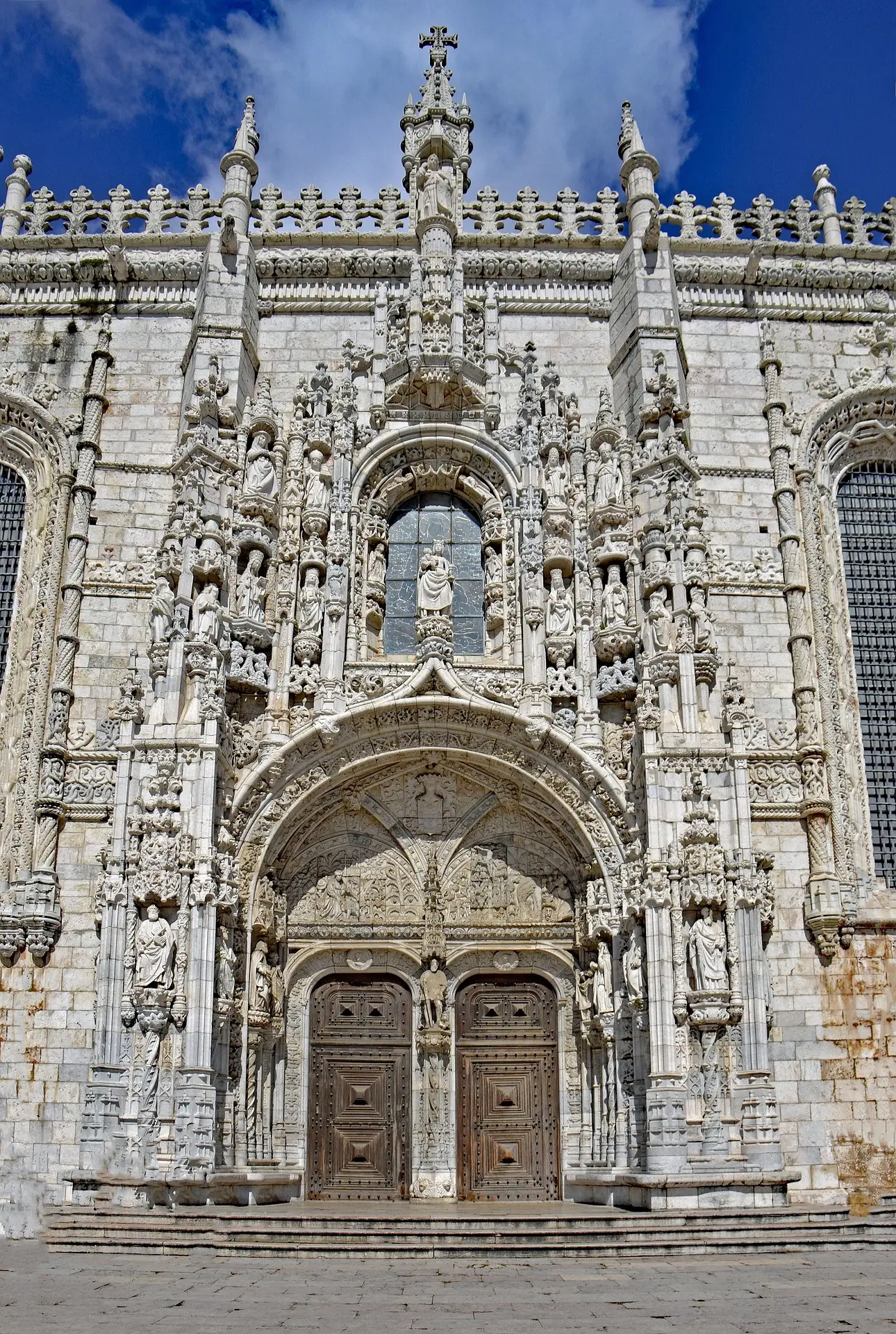
Le Mosteiro dos Jerónimos est le plus complet des complexes monastiques manuélins encore debout au Portugal. Diogo Boitac a commencé l'église et le cloître vers 1501 ; João de Castilho a pris le relais après 1517 et a achevé le calcaire finement sculpté du cloître, du portail sud et de l'entrée de la salle capitulaire. Le résultat est un édifice que l'on découvre en le traversant : une église à trois nefs voûtées avec de minces piliers octogonaux et une extraordinaire voûte en filet de pierre au-dessus, un cloître à deux étages où chaque colonne est sculptée différemment de cordages, nœuds, coraux et astrolabes, et une enfilade de dépendances — réfectoire, salle capitulaire, tribune haute — qui demandent environ soixante-quinze à quatre-vingt-dix minutes pour une visite attentive.
La Torre de Belém est un bastion en calcaire de quatre étages achevé en 1519-1520, conçu par Francisco de Arruda comme porte cérémonielle et forteresse de défense fluviale. Elle mesure environ vingt-cinq mètres de haut, peut accueillir tout au plus trois cents visiteurs à la fois, et récompense ceux qui aiment admirer l'architecture autant de l'extérieur que de l'intérieur. Les détails manuélins se concentrent sur la façade côté fleuve — cordages torsadés sculptés dans le calcaire enserrant le bastion, sphères armillaires marquant le règne de Manuel Ier, et un célèbre rhinocéros sculpté qui commémorerait le rhinocéros indien offert au pape Léon X en 1515. L'intérieur est sobre comparé au monastère : salles de pierre nues, une petite chapelle, et une série de terrasses accessibles par un seul escalier en colimaçon étroit.
Temps nécessaire et flux des visiteurs
Prévoyez soixante-quinze à quatre-vingt-dix minutes pour une visite complète du monastère, incluant l'église, le cloître, la salle capitulaire, le réfectoire et la tribune haute. Les visiteurs passionnés de détails manuélins ou ayant une formation en histoire maritime y passent souvent deux heures ; ceux qui ont un emploi du temps serré peuvent réduire à soixante minutes en se concentrant sur le cloître et les tombes des porches. L'intérieur du monastère est largement indépendant de la météo : pluie ou chaleur estivale n'altèrent quasiment pas l'expérience dans l'église et le cloître.
La tour fonctionne différemment. Prévoyez quarante-cinq à soixante minutes au total — y compris l'attente pour l'escalier en colimaçon, qui constitue le goulot d'étranglement. Les salles intérieures et la terrasse inférieure prennent environ vingt minutes ; la montée vers la terrasse supérieure par l'escalier étroit se fait à sens unique sous un système de feux tricolores, car l'escalier est trop étroit pour une circulation bidirectionnelle. Un samedi de pointe en juillet, la file d'attente pour la terrasse supérieure peut atteindre quarante minutes ; un mercredi de janvier, elle est souvent immédiate. L'expérience dépend également de la météo, contrairement au monastère : la terrasse supérieure est ouverte, exposée au vent, et nettement moins agréable sous une forte pluie. La vue sur le Tage depuis le sommet — en direction du monastère, vers l'Atlantique, et de l'autre côté vers la statue du Cristo Rei — est la principale récompense et la raison pour laquelle la plupart des visiteurs viennent.
Opérateurs et billetterie
Les deux monuments partagent le même réseau d'exploitation — ils sont gérés par Museus e Monumentos de Portugal, l'agence publique qui a succédé à la Direção-Geral do Património Cultural pour l'exploitation des sites. Concrètement, cela signifie une billetterie unifiée, le même système de scan de QR code à chaque entrée et un portail en ligne commun où sont vendus les billets coupe-file officiels. Les billets combinés pour les deux monuments sont vendus pour la même matinée et utilisent un seul QR code scanné à chaque porte.
Sur le plan opérationnel, les deux sont gérés comme des sites distincts, avec des files d'attente séparées, des voies prioritaires distinctes et des guichets différents. Acheter un billet au guichet du monastère ne vous donne pas la priorité à la tour, et vice versa. Le billet combiné est le seul moyen de garantir des créneaux le même matin aux deux sites sans faire la queue à deux guichets. La file d'attente standard à la tour peut être plus longue que celle du monastère les samedis d'été, car le débit plus faible de la tour (dû au goulot d'étranglement de l'escalier) rend la file d'attente plus lente, même si le nombre absolu de visiteurs est inférieur. Les deux monuments sont fermés aux mêmes cinq dates annuelles — 1er janvier, dimanche de Pâques, 1er mai, 13 juin et 25 décembre — mais appliquent des règles de fermeture hebdomadaire légèrement différentes ; vérifiez les deux horaires avant de planifier une matinée combinée.
Accessibilité
Le Mosteiro dos Jerónimos est largement accessible au rez-de-chaussée. L'église, la galerie du cloître au niveau du sol, la salle capitulaire et le réfectoire sont tous sans marche ou accessibles par rampe depuis l'entrée principale. La galerie supérieure du cloître n'est accessible que par des escaliers, ce qui signifie que les utilisateurs de fauteuils roulants et de poussettes ne peuvent pas profiter de la perspective aérienne sur la cour du cloître, mais conservent l'accès à environ deux tiers de la surface du complexe. Des toilettes accessibles sont signalées près de la billetterie.
La tour est le plus difficile des deux monuments pour les visiteurs à mobilité réduite. Le bastion inférieur et les salles du rez-de-chaussée sont accessibles par la passerelle en bois qui traverse le petit fossé. Les terrasses supérieures, d'où l'on a une vue sur le fleuve, ne sont accessibles que par l'étroit escalier en colimaçon — il n'y a ni ascenseur, ni monte-personne, ni itinéraire alternatif. Les visiteurs qui ne peuvent pas emprunter l'escalier peuvent toujours découvrir les salles basses et les vues sur le fleuve depuis le rez-de-chaussée, mais le panorama emblématique est structurellement inaccessible. Les visiteurs à mobilité réduite, sujets au vertige ou à la claustrophobie devraient privilégier le monastère comme site principal et considérer la tour comme une photo extérieure depuis la promenade au bord du fleuve.
Quel ordre, quelle combinaison
Si vous avez une demi-journée à Belém, faites les deux. La séquence la plus efficace est d'abord le monastère, puis la tour, avec un arrêt aux Pastéis de Belém sur le chemin du retour. La raison : les intérieurs du monastère deviennent nettement plus fréquentés à partir de la mi-matinée, donc le premier créneau de la journée passé sur place offre les meilleures photos et le cloître le plus calme. Lorsque vous terminez au monastère — vers onze heures trente dans cette séquence — la tour a déjà absorbé sa première vague et vous pouvez vous y rendre avec une file d'attente courte. La mi-après-midi à la tour est également viable en hiver, lorsque la lumière reste chaude ; moins en été, quand l'éblouissement zénithal aplatit la vue sur le fleuve.
Si vous avez une journée complète, faites le monastère le matin, faites une pause déjeuner dans l'un des restaurants au bord du fleuve à Doca de Belém, puis revenez pour la tour en fin d'après-midi, lorsque la lumière occidentale est à son meilleur sur la façade tournée vers le fleuve. Si vous ne disposez que de quatre-vingt-dix minutes serrées — une escale de croisière le matin, par exemple — choisissez le monastère. La tour s'apprécie aussi bien de l'extérieur que de l'intérieur, et vous pouvez la capturer lors de la marche des Pastéis de Belém vers le tramway ou le train sans payer l'entrée. Le monastère n'a pas d'expérience équivalente uniquement extérieure : le cloître, les tombes du porche et le chœur supérieur nécessitent tous un billet.
Questions fréquentes
Le monastère de Belém et la tour de Belém sont-ils sur le même billet ?
Ils sont vendus séparément à chaque porte, mais un billet combiné pour les deux le même matin est disponible auprès de l'opérateur et des revendeurs concierges. Les deux partagent un seul opérateur de billetterie (Museus e Monumentos de Portugal) et la même infrastructure de scan de QR code.
Lequel est le plus impressionnant — le monastère ou la tour ?
Des qualités différentes. Le monastère offre l'expérience intérieure la plus riche architecturalement ; la tour offre la silhouette la plus photogénique au bord du fleuve et le panorama du Tage depuis la terrasse supérieure. Les visiteurs intéressés par les intérieurs manuélins sculptés préfèrent le monastère ; les visiteurs intéressés par les vues sur le fleuve et les fortifications de l'ère des Découvertes préfèrent la tour.
À quelle distance se trouvent-ils l’un de l’autre ?
Environ un kilomètre le long de la promenade riveraine du Tage. En marchant du monastère à la tour, il faut compter dix à douze minutes sur le chemin plat et pavé qui longe le Padrão dos Descobrimentos.
Puis-je visiter l’intérieur de la tour de Belém en fauteuil roulant ?
Le rez-de-chaussée et le bastion inférieur sont accessibles. Les terrasses supérieures — d’où l’on profite des vues emblématiques sur le Tage — ne sont accessibles que par un escalier en colimaçon étroit, sans ascenseur. Les visiteurs à mobilité réduite doivent considérer la terrasse supérieure comme inaccessible.
Laquelle est la plus célèbre ?
Toutes deux sont emblématiques. La silhouette de la tour apparaît largement dans l’imagerie touristique portugaise ; le monastère est le monument payant le plus visité en nombre de billets. Pour les primo-visiteurs disposant de peu de temps, l’expérience intérieure du monastère est généralement la plus enrichissante.
La tour est-elle adaptée aux enfants ?
Les enfants plus âgés apprécient généralement l’escalier en colimaçon et la terrasse panoramique ; l’escalier étroit est difficile avec des tout-petits ou une poussette (aucun accès poussette au-delà du rez-de-chaussée). Le cloître ouvert et les tombes du monastère sont plus faciles avec de jeunes enfants.
Fermet-elles toutes les deux le lundi ?
Les deux monuments observent une fermeture hebdomadaire le lundi, conformément à la pratique standard des Museus e Monumentos de Portugal. Ils ferment également le 1er janvier, le dimanche de Pâques, le 1er mai, le 13 juin et le 25 décembre. Confirmez toujours les horaires actuels directement auprès de l’opérateur avant de planifier votre visite.
Lequel a la pire file d’attente ?
Les samedis de pointe en été, la file d’attente de la tour peut sembler plus lente en raison du goulot d’étranglement de l’escalier sur la terrasse supérieure. Les billets coupe-file dans les deux monuments contournent la file d’attente standard au guichet, mais ne contournent pas la file d’attente de l’escalier à la tour.
Puis-je voir la tour sans payer l'entrée ?
Oui — la tour est visible en grandeur réelle depuis la promenade riveraine et se photographie parfaitement depuis le chemin public. La vue extérieure capture l'essentiel du détail manuélin. Les salles intérieures et la terrasse supérieure nécessitent un billet.
Si je n'ai le temps que pour un seul, lequel choisir ?
Pour une expérience intérieure qui récompense une heure ou plus d'attention soutenue, choisissez le monastère. Pour une photo emblématique unique et une montée de quarante-cinq minutes avec vue sur le Tage, choisissez la tour. Pour les visiteurs venant à Lisbonne pour la première fois avec une demi-journée à Belém, le monastère l'emporte.