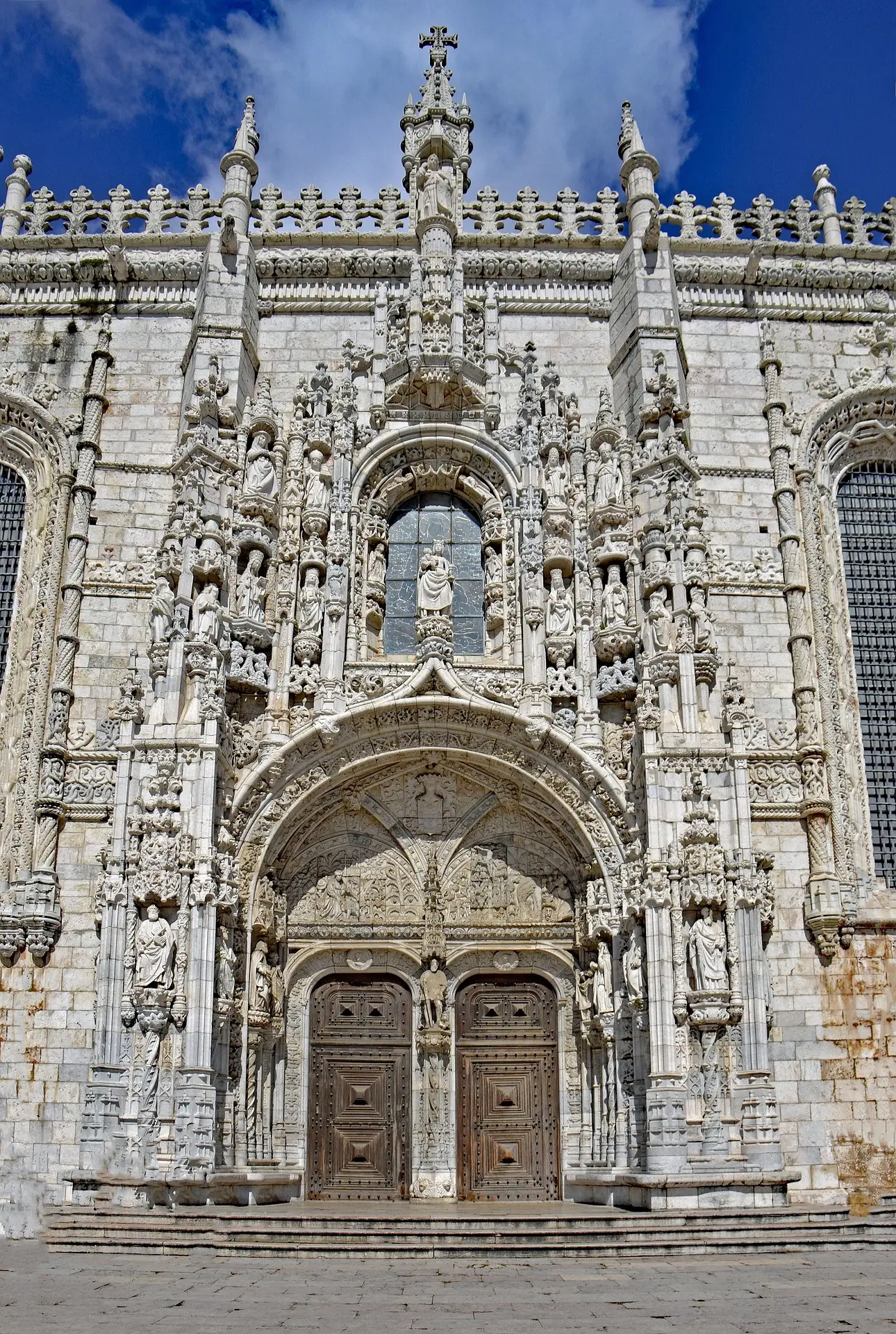
Belém Monastery & Pastéis de Belém: How to Pair the Two
The original 1837 bakery, the monastery 200 metres away, the secret monastic recipe, and how to sequence the visit so you skip the worst of both queues.
Almost no visitor leaves Belém without doing both the monastery and the pastéis. The pairing is one of Lisbon's most-completed half-day itineraries, and it has more history than most visitors realise — the original Fábrica de Pastéis de Belém opened in 1837, four years after the monastic dissolution that emptied the monastery of its Hieronymite community, and the bakery's founding family bought the recipe directly from the displaced monks. The bakery is two hundred metres from the monastery's main entrance, on the same Rua de Belém, and the two visits naturally combine in either order. This guide covers the history of the bakery, the structure of the queues (the takeaway window and the salon are separately operated and have very different waits), the relationship between the two queues across the day, and the sequencing decisions that genuinely matter for a smooth visit.
The 1837 Recipe and Why It Came From the Monks
The Hieronymite community at Jerónimos baked custard tarts as part of standard monastic kitchen practice for centuries — egg yolks were a by-product of laundering monastic habits (egg whites were used as a starching agent), and rather than discard the yolks, monasteries across Portugal and Spain developed elaborate yolk-based sweets. When Portugal's liberal-era reforms dissolved the religious orders in 1833 and the Hieronymites left Jerónimos, the monks who had baked the tarts found themselves without a livelihood. They sold their recipe to a sugar-refinery owner who lived next door to the monastery, and in 1837 he opened a small shop selling the tarts under the name Pastéis de Belém.
The bakery has remained in the same family since, and the recipe has remained protected by an unusual structure: only three master bakers know the full formula at any given time, and they work in a secure room called the Oficina do Segredo (the Secret Workshop) attached to the rear of the building. The bakery produces tens of thousands of tarts daily; on peak summer Saturdays the daily output exceeds twenty thousand. The recipe difference between Pastéis de Belém and the generic pastel de nata sold elsewhere in Portugal is real but subtle: the cream filling at Pastéis de Belém uses more egg yolk and slightly less starch, and the pastry is laminated by hand in batches rather than machine-rolled. The hot-out-of-the-oven version, dusted with cinnamon and powdered sugar at the table, is noticeably better than the supermarket version most Lisbon visitors have already tried.
Two Queues, Two Strategies
Pastéis de Belém runs two parallel service points: the street-side takeaway window on Rua de Belém, and the much larger sit-down salon that extends backward through the building. The two are separately queued and the queues behave differently across the day. The takeaway window is the famous queue — the one that often stretches twenty or thirty metres along the pavement — but it moves quickly, typically clearing in fifteen to twenty minutes. The salon, paradoxically, can have a longer effective wait at peak times because seating turnover takes longer than over-the-counter service.
The strategy depends on what you want. If you want pastéis to walk with, eat in the riverside gardens or take back to your hotel, join the takeaway queue — it looks long but moves. If you want the full sit-down experience with coffee, the tarts dusted at the table and time to enjoy the historic salon interior, join the salon queue but accept that on a peak summer Saturday it can run forty-five minutes. The salon's back rooms — the ones furthest from the street — are the calmest and have the original blue-tiled azulejo walls; ask for a table further back if the host is seating from the front. The bakery is open every day; there is no Monday closure, so it usefully pairs with the monastery on the days the monastery itself is shut.
Sequencing: Pastéis First or Monastery First?
The conventional sequence is the monastery first, then the pastéis as a reward. There is a quieter strategy that delivers a better day: do the pastéis first, in the takeaway window queue, at opening time. The bakery opens earlier than the monastery (typically eight in the morning), the takeaway queue at that hour is short, and you can eat warm pastéis in the riverside gardens before the monastery's priority lane opens. You then arrive at the monastery before the first tour-group wave and finish the cloister, chapter house and refectory by mid-morning, exactly when the monastery starts to feel crowded.
If you are doing the Belém Tower combo as well, the cleanest full sequence is: pastéis takeaway at opening, monastery cloister visit at your priority slot, walk along the riverfront to the tower for an early-afternoon slot, then back via the salon at Pastéis de Belém for a sit-down lunch of more pastéis with coffee. This avoids the worst of every queue. The opposite sequence — monastery in the morning, tower at midday, pastéis at the busiest sit-down time — is the most common visitor pattern and produces the longest cumulative wait.
What to Order and How to Eat Them
The single product to order is the pastel de Belém itself — the takeaway window sells almost nothing else and is designed for this. A standard order is six or twelve tarts in a small cardboard cylinder, with packets of cinnamon and powdered sugar in the bag. In the salon you can also order coffee, hot chocolate, savoury salgados (small fried pastries and cheese-based snacks) and ginjinha, the Lisbon sour-cherry liqueur. The tarts arrive on small plates and are dusted with cinnamon and sugar at the table; the convention is to dust the tart heavily, eat it warm with the cinnamon-and-sugar crust crisping the custard surface, and chase with a strong coffee.
Eating standards: pick the tart up by the pastry rim rather than the custard top, eat it in two or three bites, and accept that the warm caramelised top will probably break and fall — this is normal. The cinnamon-and-sugar dusting is the local convention and meaningfully changes the flavour; visitors who try the tarts plain often miss the point. The tarts are best within ten minutes of leaving the oven; they hold well for an hour in the cardboard cylinder but lose the warm-custard contrast quickly. If you are taking them back to your hotel for later, accept that they will not be the same experience reheated.
Other Belém Riverside Stops Worth the Detour
Beyond the monastery, the tower and the pastéis, Belém has several worthwhile additional stops that fit naturally into the same half-day. The Padrão dos Descobrimentos, a 1960 modernist sculpture commissioned by the Estado Novo regime to mark the five-hundredth anniversary of Henry the Navigator's death, stands on the riverfront halfway between the monastery and the tower; the rooftop terrace requires a separate small admission and delivers a clean overhead view of the Belém compass-rose pavement and the monastery roofline.
The Centro Cultural de Belém (CCB) directly opposite the monastery houses temporary exhibitions and a contemporary-art collection (rebranded from the Berardo Collection Museum in October 2023). The MAAT, four hundred metres east, is a striking Amanda Levete building specialising in contemporary art, architecture and technology. The Maritime Museum and the National Archaeology Museum occupy the western wing of the monastery complex on separate tickets and are worth an hour each for visitors with marine-history or ancient-Mediterranean interests. The Tropical Botanical Garden two hundred metres north of the monastery is a free or low-cost nineteenth-century botanical collection of Portugal's former-colony flora; it is rarely busy and is the calmest single space in the Belém district.
Frequently asked
Is Pastéis de Belém really better than other pastel de nata?
Yes, in our view and most regulars' view — but the difference is subtle. The pastry is laminated by hand in batches and the cream uses more egg yolk than the generic recipe. The warm-from-the-oven version with cinnamon and sugar is noticeably better than the supermarket version.
Do I have to queue for hours?
No. The street-side takeaway queue looks long but moves in fifteen to twenty minutes. The sit-down salon queue can run forty-five minutes on peak Saturday lunchtimes but is much shorter at opening time and after three in the afternoon.
Is the bakery open on Mondays when the monastery is closed?
Yes. Pastéis de Belém is open seven days a week. It pairs usefully with a Monday Belém visit because you can still do the tower (open Mondays in season) and the pastéis even when the cloister is shut.
Can I buy the pastéis to take back to my country?
The tarts are best within hours of baking and do not travel well. The bakery sells boxes designed for short transport; visitors taking them on transatlantic flights typically find the texture has degraded by the time they arrive.
Are there other good pastel de nata shops in Lisbon?
Yes — Manteigaria (multiple locations including the Time Out Market at Cais do Sodré) is the most-cited alternative and has its own loyal following. The two recipes are different; trying both across a Lisbon trip is a fair comparison.
Is the salon worth the wait if I have a tight schedule?
For most visitors with under two hours total in Belém, the takeaway window is the right choice — you get the same tarts, eat them in the gardens or on the riverfront, and keep the monastery visit on schedule. The salon is worth it when you have an extra forty-five minutes to spend.
Do they accept cards?
Yes — both the takeaway window and the salon accept contactless and standard cards. Cash is also accepted. Tipping in the salon follows the standard Portuguese convention of rounding up or leaving small change.
Can I order pastéis without cinnamon and sugar?
Yes — the tarts are not dusted at the takeaway window by default. In the salon the dusting is done at the table on request. Visitors who prefer the custard flavour unadorned can eat them plain, though the cinnamon-and-sugar is the local convention.
Is there gluten-free or vegan pastel de nata at Pastéis de Belém?
No. The traditional recipe uses wheat flour and egg yolks and the bakery does not offer adapted versions. Visitors with dietary restrictions can find adapted pastel de nata at some specialist bakeries elsewhere in Lisbon.
What time should I arrive for the shortest wait?
The takeaway window is shortest at opening (around eight in the morning) and in the last hour before close. The salon is shortest at opening and after three in the afternoon. Peak waits are between roughly eleven and two seven days a week in season.